
Chapter 11: Integration Before Distribution

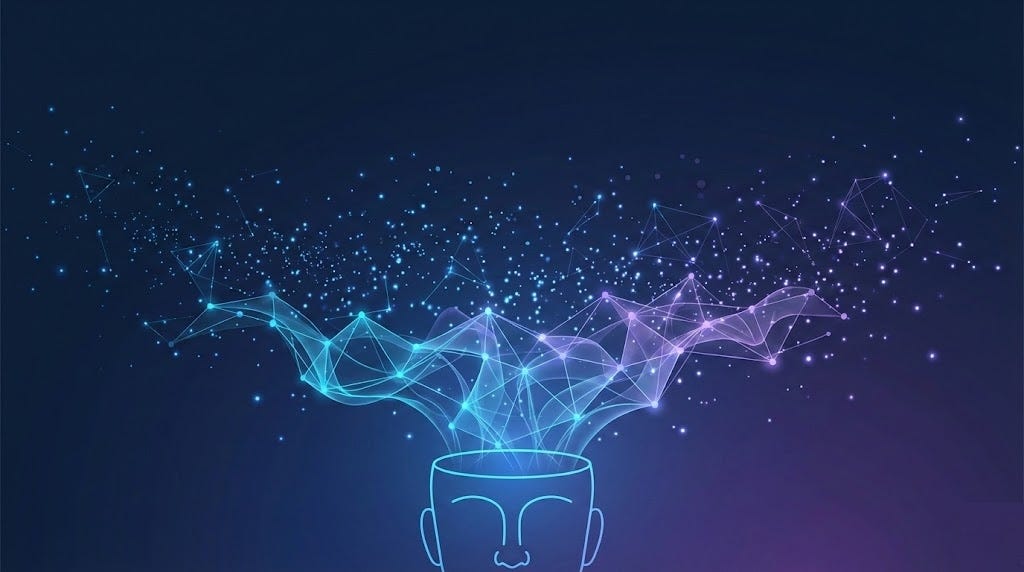
“Know thyself before you multiply thyself.”
There is a practice in Bikram yoga called Standing Bow Pulling Pose. You stand on one leg. You reach back with one hand, grip the inside of the ankle, and kick the foot away from your body while simultaneously reaching the other arm forward toward the mirror. The pose requires balance, strength, flexibility, and concentration simultaneously. It cannot be achieved by developing these qualities separately and then combining them. They must be developed together, in the pose itself, through the process of repeatedly attempting it, falling, and attempting again.
The instruction given to beginning students is not: develop your balance first, then your strength, then your flexibility, then try the pose. The instruction is: get into the pose and let the pose develop you. Fall. Get up. Try again. The integration happens through the attempt, not before it.
This is a useful image for what integration means — and what it does not mean.
Integration before distribution does not mean achieving perfect psychological wholeness before engaging with technology. It does not mean waiting until you have resolved every shadow, unified every conflicting drive, and achieved contemplative mastery before participating in the digital world. That standard would exclude everyone, forever.
It means something more precise: maintaining the embodied practice of integration as a continuous commitment, even as — especially as — you extend into distributed systems. Not integration as a prerequisite you complete and then set aside. Integration as a discipline you maintain in proportion to the power you wield and the scale at which your agency operates.
The pose develops you only if you keep attempting it. The integration develops you only if you keep practicing it. And the stakes of the practice increase in direct proportion to how widely your consciousness distributes.
What Integration Actually Means
The word integration comes from the Latin integrare — to make whole, to renew, to restore to a complete state. In psychological usage it has a specific meaning: the process by which dissociated or split-off aspects of experience are brought into relationship with the rest of the psyche, such that the whole can function coherently rather than in conflicting fragments.
This is not the same as resolution. Integration does not eliminate tension. A person who has integrated their anger has not stopped feeling angry. They have developed the capacity to feel anger without being controlled by it — to allow anger to inform their response without anger becoming their response. The anger is present, acknowledged, available as information. It is not split off, denied, or enacted without awareness.
Integration, in this sense, is the opposite of dissociation. Not the cosmic dissociation described in Chapter 4 — consciousness fragmenting into bounded biological perspectives — but clinical dissociation: the splitting off of aspects of experience from the central organizing awareness because they are too threatening, too painful, or too contradictory to be held consciously.
We all dissociate, to varying degrees. We maintain beliefs that contradict our behavior without noticing the contradiction. We pursue goals that conflict with our stated values without examining the conflict. We feel emotions that we do not acknowledge feeling. We hold shadow material — the aspects of ourselves we cannot see because they are too uncomfortable — that operates in our choices without our awareness.
This is normal. It is also dangerous when the consciousness doing the dissociating is operating at planetary scale through powerful technological systems. The unexamined shadow does not disappear when you distribute. It amplifies. The fragmented values do not cohere when you scale. They compete more destructively. The conflicting drives do not resolve when you give them technological reach. They produce larger, faster, more expensive chaos.
Three Levels
Integration operates at three levels that must each be addressed, and that cannot be addressed in isolation from each other.
Body intelligence is the first and foundational level. The felt sense — the somatic knowing that precedes verbal articulation, that registers threat and safety before the mind has formed an opinion, that carries the accumulated wisdom of biological evolution in its responses to the world. The body knows things the mind has not yet articulated. When those two sources of knowing are integrated — when the body’s signals are received and considered rather than overridden or ignored — the resulting intelligence is more complete than either source provides alone.
The contemporary tendency is to override body intelligence with cognitive reasoning. To dismiss the felt sense as irrational. To medicate or optimize away the body’s signals rather than read them. This is a form of dissociation — a splitting of the cognitive layer from the somatic layer — that produces a particular kind of dysfunction: the person who reasons brilliantly toward catastrophically wrong decisions because they have lost access to the somatic information that would have told them something was wrong before the argument concluded.
Heart intelligence is the second level. The relational knowing that develops through sustained engagement with others — the capacity for empathy, for attunement, for genuine recognition of another’s reality as real. This is not sentiment. It is a sophisticated form of information processing that the nervous system performs through mirror neurons, through social feedback, through the long developmental process of learning to read other people accurately and care about what you read.
Heart intelligence develops only in relationship. You cannot develop it in isolation, through books, through intellectual understanding of other people’s experiences. It requires actual encounter — with real people, in real situations, where your responses to them and their responses to you provide continuous feedback that calibrates your relational knowing over time. Technology that substitutes digital interaction for embodied relational encounter is substituting a training ground with less bandwidth, less consequence, and less capacity to develop the full range of heart intelligence.
Head intelligence is the third level. The abstract reasoning, narrative coherence, and meta-cognitive capacity that allow consciousness to model itself, to plan across time, to hold competing considerations simultaneously and reach conclusions that integrate them. This is what education primarily develops, what most professional training focuses on, what the cognitive enhancement technologies of our time most directly extend.
Head intelligence without body and heart intelligence is the profile of what Robert Hare’s research identified in psychopathy: sophisticated cognitive function, capable of complex reasoning and strategic planning, combined with absence of somatic and relational knowing. The psychopath is not stupid. They are dissociated — cut off from the body intelligence that registers consequence as felt cost, and from the heart intelligence that registers others’ suffering as real.
Most people are not psychopaths. But the culture of technological optimization systematically privileges head intelligence and systematically devalues body and heart intelligence — treating them as primitive, irrational, inefficient. The result is not psychopathy. It is a milder version of the same dissociation: cognitive sophistication combined with attenuated somatic and relational knowing, producing intelligent-seeming choices that are missing the information those other layers would have provided.
Integration means the three levels working together — body, heart, and head each contributing their specific form of knowing to the decisions consciousness makes, none overriding the others, all in communication. This is not a state you achieve. It is a practice you maintain. And it is the practice that makes distribution safe.
The Risk of Premature Distribution
The contemplative traditions that developed practices for boundary dissolution and expanded consciousness were unanimous on one point: premature expansion is more dangerous than no expansion at all.
The Tibetan Buddhist framework describes specific stages of practice that must be completed in sequence before advanced techniques are introduced. The preliminary practices — ngondro — involve hundreds of thousands of repetitions of foundational exercises: prostrations, mantra recitation, mandala offerings, guru yoga. These are not decorative. They are understood as the work of clearing psychological obstacles — dissociated material, unintegrated shadow, conflicting drives — before more powerful practices amplify whatever is present in the practitioner’s mind.
The logic is precise: advanced practices amplify. They amplify whatever is already present. A practitioner with integrated motivation, clear intention, and stable emotional ground finds those qualities amplified. A practitioner with unresolved trauma, fragmented values, or conflicting drives finds those amplified instead. The practice does not distinguish. It magnifies what is there.
Technology operates by the same logic. It amplifies what is already present in the consciousness using it. This is not a metaphor. It is a description of what actually happens when powerful tools are placed in human hands.
Fragmentation Amplified
The person with fragmented values who gains access to planetary-scale communication does not find their values coherence through the experience. They find their fragmentation amplified — different aspects of their psychology finding expression through different channels, different audiences receiving different versions of the same person, the contradiction between public persona and private behavior becoming more extreme as the public persona can be more carefully constructed while the private behavior continues unchanged.
The organization with conflicting objectives that deploys AI across its operations does not find its strategy clarified through the deployment. It finds its conflicts automated — different AI systems optimizing for different objectives that the organization never reconciled, producing outputs that contradict each other at scale and at speed.
The society with unresolved tensions around identity, belonging, and meaning that builds planetary-scale communication infrastructure does not find those tensions resolved through connection. It finds them amplified — every local conflict capable of becoming global, every fault line accessible to external amplification, every unhealed wound reachable by those who would use it.
This is the civilizational version of the yogic warning: we have been running advanced practices on a practitioner who has not completed the preliminaries. The practices are amplifying what is present. What is present, in significant measure, is unintegrated.
The Specific Risks
Premature distribution produces specific failure modes that are worth naming precisely because they are already visible.
Identity fragmentation is the first. When consciousness distributes across multiple platforms, multiple personas, multiple contexts simultaneously — each with different audiences, different norms, different versions of the self — the integrating narrative that makes a coherent identity possible comes under strain. The self that exists nowhere except in the integration of these multiple contexts loses the thread of its own coherence. Not dramatically, not in the form of clinical dissociative identity disorder, but in the subtler form of not knowing what you actually think until you check what you posted.
Value incoherence is the second. When agency distributes across systems — through the supply chains you participate in, the platforms you use, the organizations you belong to, the algorithms you feed with your data and attention — your effective values diverge from your stated values. You say you value privacy and use services that monetize your data. You say you value human dignity and participate in supply chains that violate it. You say you value truth and share content you have not verified. The distributed system enacts values you have not chosen, and the gap between your stated and effective values grows without the friction of direct embodied consequence to close it.
Attention dissolution is the third. The distributed self — present in many places, attending to many streams, responsive to many inputs — loses the capacity for the deep, sustained attention that generates genuine understanding. Not because intelligence is diminished. Because the attentional resource is spread across too many surfaces simultaneously, with the result that nothing receives the kind of sustained attention that produces real knowledge, real connection, real comprehension. The distributed person knows about many things and understands few.
Consequence blindness is the fourth. When your actions propagate through distributed systems and the consequences are invisible to you, the feedback loop that normally corrects behavior through experienced consequence breaks down. You continue doing things whose effects you cannot see. The experience of acting without consequence — which is the phenomenology of much technological agency — gradually shapes a psychology in which consequences feel less real, less important, less worth attending to. Not nihilism exactly. A milder, more pervasive disconnection from the reality that actions have effects and effects matter.
These failure modes are already present at population scale. They are not hypothetical future risks. They are current conditions, producing current dysfunction, in proportion to the degree of distribution that has already occurred without the integrative foundation that would make it safe.
Practices for Integration
The practices that develop integration are not mysterious. They are ancient, cross-cultural, extensively documented, and largely ignored by the technological culture that most needs them. Not because they are secret or inaccessible — they are freely available, taught in thousands of communities, written about in thousands of books. But because they are slow, require sustained commitment, produce benefits that are difficult to measure, and cannot be optimized or automated.
They are, in other words, exactly the kind of thing that the technological optimization imperative systematically deprioritizes.
Embodiment Practices
The practices that develop body intelligence share a common feature: they require sustained, attentive engagement with somatic experience in real time. They cannot be performed while doing something else. They cannot be rushed. They do not produce outputs that can be evaluated on a productivity metric. What they produce is integration — the gradual development of a relationship between cognitive awareness and somatic experience in which each informs the other.
Yoga, in its full form — not the exercise version but the contemplative practice — is one of the most systematically developed technologies for body-mind integration in human history. The physical postures are not ends in themselves. They are vehicles for developing the capacity to attend to somatic experience with precision and equanimity — to feel what the body is experiencing without being overwhelmed by it, to receive the body’s signals as information rather than as threats or irritants. This capacity, developed in the contained context of practice, transfers to life: the person who has learned to attend to subtle somatic signals in a yoga posture has developed the attentional infrastructure for attending to subtle somatic signals in a meeting, a relationship, a decision.
Breathwork produces similar integration through a more direct route. Conscious manipulation of the breath — slowing it, deepening it, altering the ratio of inhalation to exhalation — directly modulates the autonomic nervous system, shifting the balance between sympathetic activation and parasympathetic rest. This is not metaphorical. The breath is one of the few autonomic processes that is also under voluntary control, making it a bridge between the cognitive and somatic systems. Learning to use that bridge deliberately develops the integration between systems that normally operate in relative isolation.
Nature immersion is a less structured but equally important practice. The human nervous system evolved in relationship with natural environments and retains a deep attunement to them that technological environments do not provide. Time in nature — walking, sitting, attending to the non-human world — reliably produces the kind of parasympathetic restoration that counteracts the chronic sympathetic activation of digital environments. More than restoration, it provides a form of presence that recalibrates the attentional system: nature does not optimize for capture, does not produce the intermittent variable reward that digital systems use to maintain attention. It simply is, and attending to it requires the kind of open, patient, non-goal-directed attention that integration requires.
Relational Practices
The practices that develop heart intelligence share a different common feature: they require genuine encounter with other people in conditions where the encounter cannot be controlled, edited, or optimized. The risk of being seen. The vulnerability of being affected by another’s reality. The discomfort of genuine difference. These are not bugs in relational practice. They are the mechanism by which heart intelligence develops.
Deep listening is perhaps the simplest and most demanding relational practice. To listen to another person with the intention of understanding rather than responding — to genuinely receive what they are saying without immediately processing it through the filter of your own agenda — is more difficult than it sounds and more transformative than it appears. It requires the temporary suspension of the self-referential processing that normally runs continuously, and in that suspension, creates the conditions for genuine contact with another’s reality.
Psychotherapy and counseling, when practiced well, are technologies for developing heart intelligence through structured relational encounter. The therapeutic relationship — its consistency, its safety, its specific boundaries that create conditions for genuine vulnerability — provides a training ground for relational capacities that may not have developed adequately in earlier life. Not everyone needs therapy. But the culture that treats therapy as emergency intervention for pathology, rather than as developmental practice for integration, underestimates what it provides.
Community participation — sustained engagement with specific groups of people over time, in shared endeavors that require genuine coordination and genuine disagreement — develops heart intelligence in ways that cannot be replicated by any number of online connections. The neighbor you have to work with despite your differences. The collaborator whose approach conflicts with yours and must be negotiated rather than avoided. The community that holds you accountable to commitments you made to real people who will notice if you don’t follow through. These are the relational conditions that develop the heart intelligence that distributed agency requires.
Reflective Practices
The practices that develop head intelligence in its integrative function — not just cognitive sophistication, but the capacity for genuine self-knowledge, values clarification, and coherent narrative — are the most directly countercultural in the current technological environment because they require sustained attention to inner life in conditions of minimal external stimulation.
Meditation in its many forms is the most extensively studied of these practices. The research on meditation’s effects is substantial and consistent: regular meditation practice produces measurable changes in attention regulation, emotional processing, self-referential thought, and the relationship between cognitive and somatic experience. What the research captures less well is what practitioners report: the development of a relationship to one’s own mind that makes it possible to observe mental processes rather than being entirely identified with them. This observer position — the capacity to watch thoughts and emotions arise and pass without being swept away by them — is the experiential ground of integration. You cannot integrate what you cannot observe.
Journaling and contemplative writing provide a less structured but widely accessible version of the same function. The act of writing about experience — attempting to articulate in language what is happening in awareness — requires a degree of self-observation that is itself integrative. The journal becomes a mirror: you can see, on the page, what you were thinking and feeling, and from that slight distance, notice patterns and contradictions that were invisible from inside the experience. Over time, the journal becomes a record of development — of values clarifying, of recurring patterns becoming visible, of the self becoming somewhat more knowable to itself.
Values clarification — the deliberate practice of examining what you actually value, as distinct from what you say you value or what you think you should value — is perhaps the most directly relevant of the reflective practices to the challenge of distribution. Before you distribute your agency through powerful technological systems, the question of what that agency is in service of is not optional. Values that have not been examined do not disappear when you distribute. They enact themselves through your distributed systems, sometimes in ways that surprise and disturb you. The examination before the distribution is not guarantee of good outcomes. It is the responsible exercise of the power that distribution provides.
The Rehearsal We Are Living
Everything described in this book — the distributed intelligence, the mystical capacities becoming technological features, the evolution of dissociation, the planetary nervous system, the ethics of attention — is preparation for something.
Not a destination. A capacity.
The five-stage model of dissociative evolution established in Chapter 4 identified Stage 5 — intentional modulation — as the stage toward which the current trajectory points but which has not yet arrived. The defining feature of intentional modulation is consciousness choosing its substrate based on integrated understanding of what each situation requires — moving fluidly between biological and technological substrates, distributing and returning, extending and anchoring, with the wisdom to know which mode serves the present moment.
This is not a posthuman fantasy. It is the natural extension of what consciousness has been doing throughout the evolutionary arc traced in Chapter 2: migrating through substrates, externalizing functions, gaining the capacity to operate at new scales without losing the wisdom of the substrates it has moved through. The gut intelligence is not lost when heart intelligence develops. The heart intelligence is not lost when head intelligence develops. The biological intelligence is not lost — should not be lost — when network intelligence develops.
The rehearsal is what we are living now. The current moment — with all its dysfunction, its amplified fragmentation, its capabilities outrunning its wisdom — is not a failure. It is the stage that must be lived through. The adolescent brain makes decisions before the prefrontal cortex is fully myelinated. Those decisions have consequences. The consequences teach. The teaching is part of what completes the development.
The question is whether the consequences of premature distribution are survivable — whether the teaching can occur without the student being destroyed by the lesson.
What the Traditions Offer
The mystical traditions that developed the siddhis — the extraordinary capacities that technology has now externalized — have thousands of years of experience with the specific challenge we are facing. They know what happens when power exceeds wisdom. They have watched students rush the process and fragment. They have developed practices for stabilization, for integration, for the maintenance of grounded presence under conditions of expanded capacity.
This accumulated wisdom is available. It has not been destroyed by technology. It lives in lineages, in communities, in texts, in the bodies of practitioners who have maintained these practices through centuries of cultural change. It is not incompatible with technology — the contemplative practitioner who uses AI as a research tool and a thinking partner while maintaining a daily meditation practice is not in contradiction. They are integrating.
What would be lost — what is being lost — is the dismissal of this wisdom as irrelevant to the technological project. The assumption that the challenge of our time is purely technical, that the question of how to build safe AI is a problem for engineers and alignment researchers alone, that the integration work the traditions describe is personal spiritual practice with no bearing on the civilizational challenge of distributed consciousness.
It has direct bearing. The alignment problem in AI — the challenge of ensuring that AI systems pursue goals that are genuinely aligned with human flourishing — is a specific technical version of the integration problem. How do you build a system whose values are coherent, whose objectives reflect genuine goods rather than proxy metrics, whose operation remains in service of what actually matters rather than what can be measured? This is not only a technical question. It is a question that the contemplative traditions have been working on for millennia, in the domain of individual human consciousness, with hard-won and extensively documented results.
The conversation between technical AI safety research and contemplative wisdom traditions is one of the most important conversations not yet happening at adequate scale. It needs to happen. The technical researchers have capabilities the traditions lack. The traditions have wisdom the technical researchers lack. Neither alone is adequate to the challenge.
The Individual Responsibility
The civilizational challenge is real. It requires institutional responses, regulatory frameworks, technical research, and collective action at scales that no individual can produce alone. This is true and important.
It is also insufficient as a response to the challenge, because the civilizational challenge is composed of individual choices made at scale. The attention economy exists because billions of individuals have, moment by moment, chosen engagement over depth. The fragmentation of public discourse exists because billions of individuals have, moment by moment, shared outrage rather than understanding. The colonization of inner life by digital environments exists because billions of individuals have, moment by moment, chosen the screen over the body, the notification over the present moment, the platform over the person in front of them.
These are not autonomous systemic forces. They are the aggregate of individual choices, each of which was made by a person who had, in that moment, the option to choose otherwise. The systems are designed to make the harmful choice easier. But the choice is still made by a person.
This means the individual practice of integration is not merely personal. It is political in the original sense: it is the practice of being a citizen — a participant in collective life — with the quality of presence and the coherence of values that collective life requires. Every individual who maintains embodied integration while engaging with distributed systems is contributing something to the collective capacity that the civilizational challenge requires. Not enough alone. Necessary nonetheless.
Know thyself before you multiply thyself. This is not advice for the spiritually inclined. It is the practical prerequisite for anyone whose agency operates at scale through technological systems — which, in the current moment, means nearly everyone in the developed world and an increasing proportion of the global population.
The ghost has left the machine. The distribution is real and accelerating. The question of what kind of ghost is doing the leaving — how integrated, how grounded, how genuinely in service of what matters — is the question that determines what the distribution produces.
Integration is not the alternative to distribution. It is the condition that makes distribution safe. And the practice of integration is not separate from engagement with the distributed world. It is what allows that engagement to remain in service of genuine flourishing rather than becoming its sophisticated opposite.
That is what the conclusion assembles: not a final answer, but a final orientation. The body as anchor. Consciousness as amphibious. Attention as the measure of care. And the irreducible human responsibility to remain present, grounded, and genuinely oneself — whatever substrates that self extends through.